
Page Contents
Transform Your Home with the Biggest Indoor Trees That Thrive
The biggest indoor trees for homes include Fiddle Leaf Figs (up to 10 feet), Rubber Trees (8-10 feet), and Norfolk Island Pines (6-8 feet indoors), all requiring bright, indirect light and proper drainage.
Imagine walking into your living room and feeling like you’ve stepped into a lush forest sanctuary. The biggest indoor trees can transform any space from ordinary to extraordinary, creating a natural oasis that purifies your air and soothes your soul.
Many homeowners struggle to find plants that make a real visual impact indoors. Small houseplants get lost in large rooms. You want something dramatic that fills empty corners and creates a stunning focal point.
This guide reveals the top large indoor trees that can grow 6-20 feet tall inside your home. You’ll learn which varieties thrive indoors, how to care for them, and styling tips that maximize their impact.
Top 8 Biggest Indoor Trees for Your Home
Ready to turn your living space into a green sanctuary? These tall indoor plants pack serious visual punch while thriving in your home’s conditions. Let’s dive into the standout varieties that deliver maximum impact.
The Show-Stopping Fiddle Leaf Fig
The Fiddle Leaf Fig reigns supreme among the biggest indoor trees. This Instagram darling grows 6-10 feet indoors with those iconic violin-shaped leaves that everyone loves. But here’s the catch – it’s a bit of a diva.
Your Fiddle Leaf Fig craves bright, indirect light. Think of a spot about 3-4 feet from a south-facing window. Direct sunlight will scorch those beautiful leaves, while too little light causes leaf drop. Water when the top inch of soil feels dry, and don’t move it around once it’s happy in its spot.
Good Tip!
Wipe your Fiddle Leaf Fig’s leaves weekly with a damp cloth. Clean leaves photosynthesize better and look stunning in your space.
The Forgiving Rubber Tree
If you want drama without the fuss, the Rubber Tree is your best friend. These large houseplants for indoors reach an impressive 8-10 feet and tolerate lower light better than most big house trees. Their glossy, dark green leaves create instant sophistication.
What makes Rubber Trees perfect for beginners? They bounce back from mistakes. Forgot to water for a week? No problem. Your room doesn’t get tons of light? They’ll still grow. Just avoid overwatering – these trees prefer to dry out between drinks.
The Christmas-Ready Norfolk Island Pine
Looking for something different? The Norfolk Island Pine brings that Christmas tree vibe year-round. These unique specimens grow 6-8 feet indoors with soft, needle-like foliage arranged in perfect symmetrical tiers.
Here’s what makes them special – they need consistent moisture but not soggy soil. Think of it like keeping a sponge damp but not dripping. They also appreciate higher humidity, so consider a humidifier nearby or group them with other plants.
Good Tip!
Place a pebble tray filled with water under your Norfolk Island Pine to boost humidity naturally without overwatering the roots.
The Ultra-Low-Maintenance Dracaena Marginata
Want the biggest indoor trees with minimal effort? The Dracaena Marginata (Dragon Tree) is your answer. This spiky-leafed beauty can reach 8-12 feet and practically takes care of itself.
These statement trees tolerate low light, infrequent watering, and even some neglect. Their thin, red-edged leaves create an architectural look that works in modern and traditional spaces alike. Water every 2-3 weeks and watch it slowly but steadily climb toward your ceiling.
The best part? Dracaenas are excellent air purifiers, removing toxins like formaldehyde and benzene from your home’s air while adding that dramatic vertical element you’re after.
Light Requirements for the Biggest Indoor Trees
Getting the lighting right makes or breaks your success with the biggest indoor trees. Most plant failures happen because we guess wrong about light needs. Let’s break down exactly what your future green giants need to thrive.
Bright Indirect Light Champions
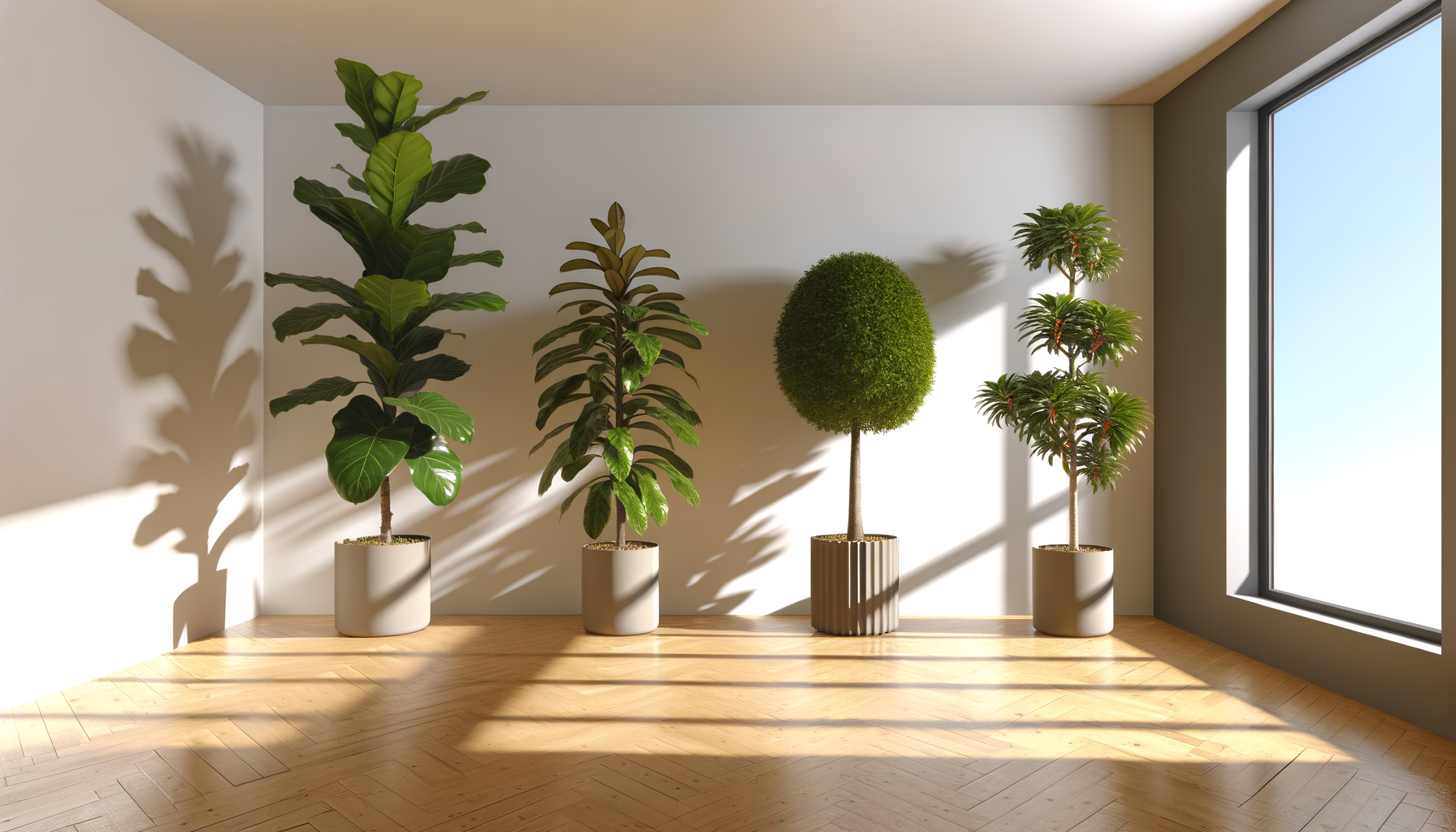
Your Fiddle Leaf Fig, Bird of Paradise, and Rubber Tree are the divas of the plant world. They want bright light but hate direct sun scorching their leaves. Place these beauties near a south-facing window with sheer curtains, or about 3-6 feet from an unobstructed east or west window.
The Bird of Paradise especially craves that bright indirect light to develop its signature split leaves. Without enough light, it stays small and boring. Furthermore, your Rubber Tree is slightly more forgiving but still needs good brightness to maintain its glossy, dramatic foliage.
Good Tip!
Use a light meter app on your phone to measure foot-candles. Bright indirect light reads 200-800 foot-candles – perfect for your light-loving giants.
Medium Light Survivors
Dracaena, Weeping Fig, and Parlor Palm offer more flexibility for homes with moderate lighting. These tall indoor plants adapt well to east-facing windows or spots that get filtered light throughout the day.
Your Dracaena Marginata can handle surprisingly dim conditions while still reaching impressive heights. The Weeping Fig tolerates various light levels but grows faster and fuller with medium to bright indirect light.
Smart Window Placement Strategies
South-facing windows provide the most intense light – great for light-hungry species but position them back from the glass. East windows offer gentle morning sun that most big house trees love. West windows can work but watch for hot afternoon sun that might stress your plants.
Good Tip!
Rotate your trees weekly so all sides get equal light exposure. This prevents leaning and promotes even, balanced growth.
For detailed guidance on indoor tree care and positioning, understanding your specific light conditions is the foundation of success with these magnificent plants.
Watering and Care Tips for Large Indoor Trees
Caring for the biggest indoor trees isn’t rocket science, but it does require understanding a few key principles. These majestic plants have different needs than your typical houseplant, and getting the basics right makes all the difference between a thriving green giant and a struggling specimen.
Proper Drainage Systems
Your large houseplants for indoors need room to breathe—literally. Choose pots that are 2-4 inches wider than your tree’s root ball, with multiple drainage holes at the bottom. Never let your tall indoor plants sit in standing water.
The right soil mix is crucial. Use a well-draining potting mix that combines regular potting soil with perlite or bark chips. This creates air pockets that prevent root rot while holding enough moisture for your tree’s needs.
Good Tip!
Place a layer of gravel or pottery shards at the bottom of large pots before adding soil. This creates extra drainage space and prevents soil from clogging drainage holes.
Smart Watering Schedules
Most big house trees prefer a “soak and dry” approach. Water deeply when the top 2-3 inches of soil feel dry to your finger. In winter, reduce watering frequency as growth slows and soil takes longer to dry.
Test soil moisture with a wooden chopstick or moisture meter. Insert it 4-6 inches deep—if it comes out damp, wait a few more days. This simple trick prevents the overwatering that kills 60% of indoor plants.
Summer watering might happen weekly, while winter watering could stretch to every 2-3 weeks. Your tree will tell you what it needs through its soil moisture levels.
Humidity Requirements
Indoor trees crave humidity levels between 40-60%, but most homes hover around 30%. Low humidity causes brown leaf tips and stressed plants.
Create humidity zones around your trees with these methods:
- Place pebble trays filled with water under pots
- Group plants together to create microclimates
- Use a humidifier during dry winter months
- Mist leaves lightly in the morning (avoid evening misting)
Good Tip!
Run your shower hot for a few minutes monthly, then bring humidity-loving trees into the steamy bathroom for a spa treatment. They’ll love the moisture boost!
Fertilizing Your Giants
Feed your biggest indoor trees during their growing season (spring through early fall). Use a balanced, water-soluble fertilizer diluted to half strength every 4-6 weeks.
Winter is rest time—skip fertilizing from November through February. Over-fertilizing causes more problems than under-fertilizing, leading to weak growth and salt buildup in soil.
Watch for signs your tree needs nutrients: pale leaves, slow growth, or yellowing from the bottom up. For detailed care guidance specific to different tree varieties, check out this comprehensive indoor tree care resource.
Remember, consistency beats perfection. Your indoor giants will thrive with regular attention to these basics rather than sporadic intensive care sessions.
Optimal Locations for Your Biggest Indoor Trees
Choosing the right spot for your biggest indoor trees can make or break their success. The perfect location balances your tree’s needs with your home’s layout and lifestyle.
Living Room Placement
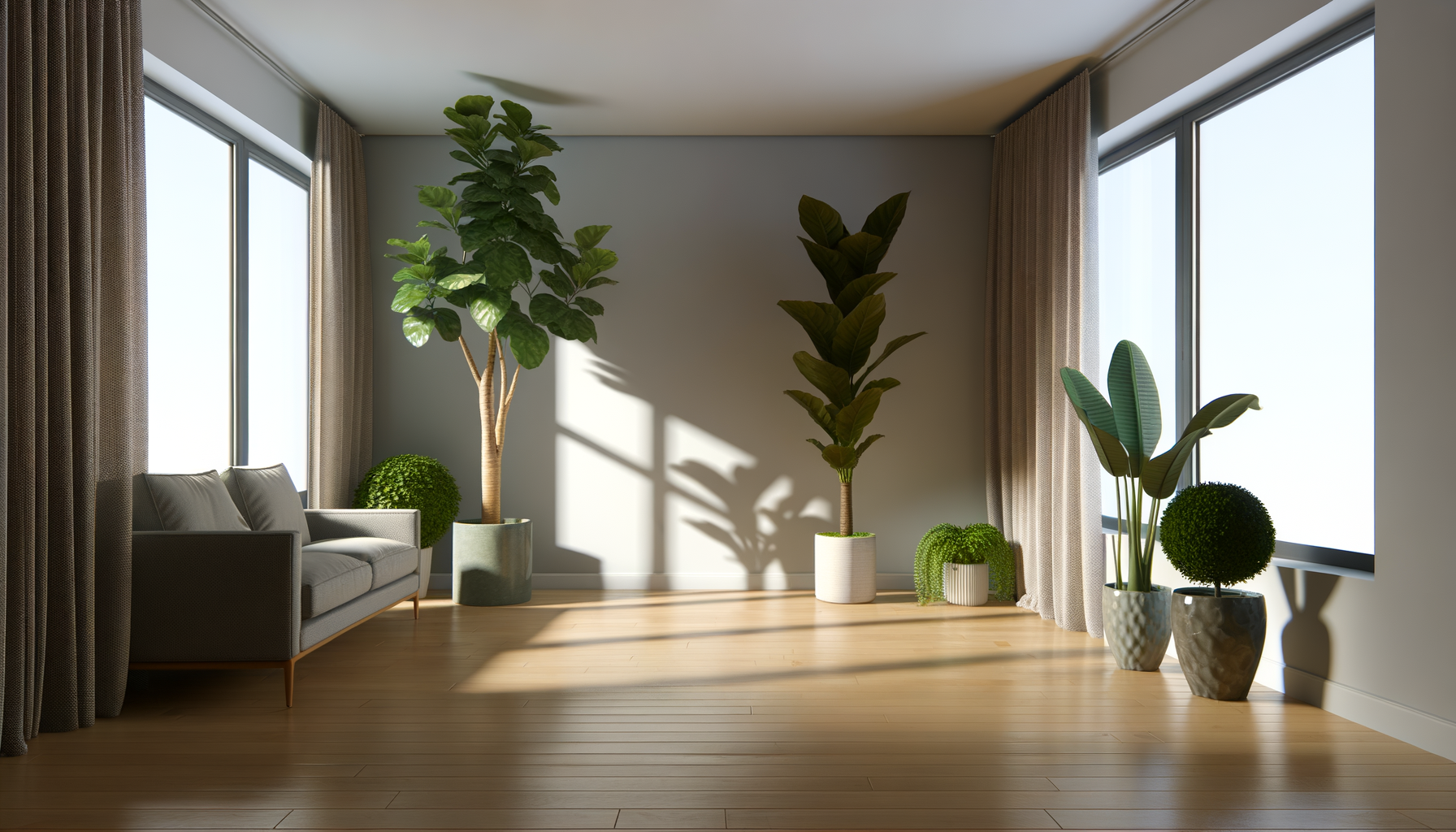
Your living room offers prime real estate for large houseplants for indoors. Corner spots work best because they don’t block foot traffic. Place your Fiddle Leaf Fig or Rubber Tree at least three feet from walkways so people can move freely around your space.
Consider your furniture arrangement too. A tall indoor plant behind a sofa creates depth and visual interest. Just make sure it gets enough light from nearby windows. Avoid spots near heating vents or air conditioning units – the constant air flow will stress your tree.
Good Tip!
Use a plant dolly or furniture sliders under heavy pots. This lets you easily move your biggest indoor trees for cleaning or seasonal light adjustments without straining your back.
Bedroom Options for Better Sleep
Your bedroom can benefit from air-purifying trees that work while you sleep. Snake plants and rubber trees release oxygen at night, unlike most plants that only do this during the day. Position them at least six feet from your bed so they don’t feel overwhelming.
East-facing bedroom windows provide gentle morning light that most big house trees love. A Norfolk Island Pine or Dracaena in this spot will thrive while helping filter your air. Just remember that some people are sensitive to plant pollen, so start with one tree and see how you feel.
Making a Statement in Your Entryway
Your entryway sets the tone for your entire home. A dramatic Bird of Paradise or towering Monstera creates an instant wow factor for guests. These large specimens work best in entryways with high ceilings and good natural light.
Make sure your chosen tree won’t block the door when it grows. Measure the mature size before you buy. For narrower entryways, consider a tall, slender variety like Dracaena Marginata that grows up rather than out.
Good Tip!
Place a decorative tray under your entryway tree’s pot to protect floors from water damage. Choose one that’s 2-3 inches larger than your pot’s base for the best protection.
Office Spaces That Boost Productivity
Home offices benefit enormously from the biggest indoor trees. Studies show that plants can increase focus and reduce stress during work hours. A Weeping Fig or Parlor Palm in the corner of your office creates a calming backdrop for video calls too.
Position your office tree where it won’t cast shadows on your computer screen. North-facing windows work well because they provide steady, indirect light without glare. If your office lacks natural light, consider adding a grow light to keep your tree healthy.
For more detailed guidance on large indoor trees and their specific care needs, expert resources can help you choose the perfect variety for each room in your home.
Best Styling and Design Ideas for Large Indoor Trees
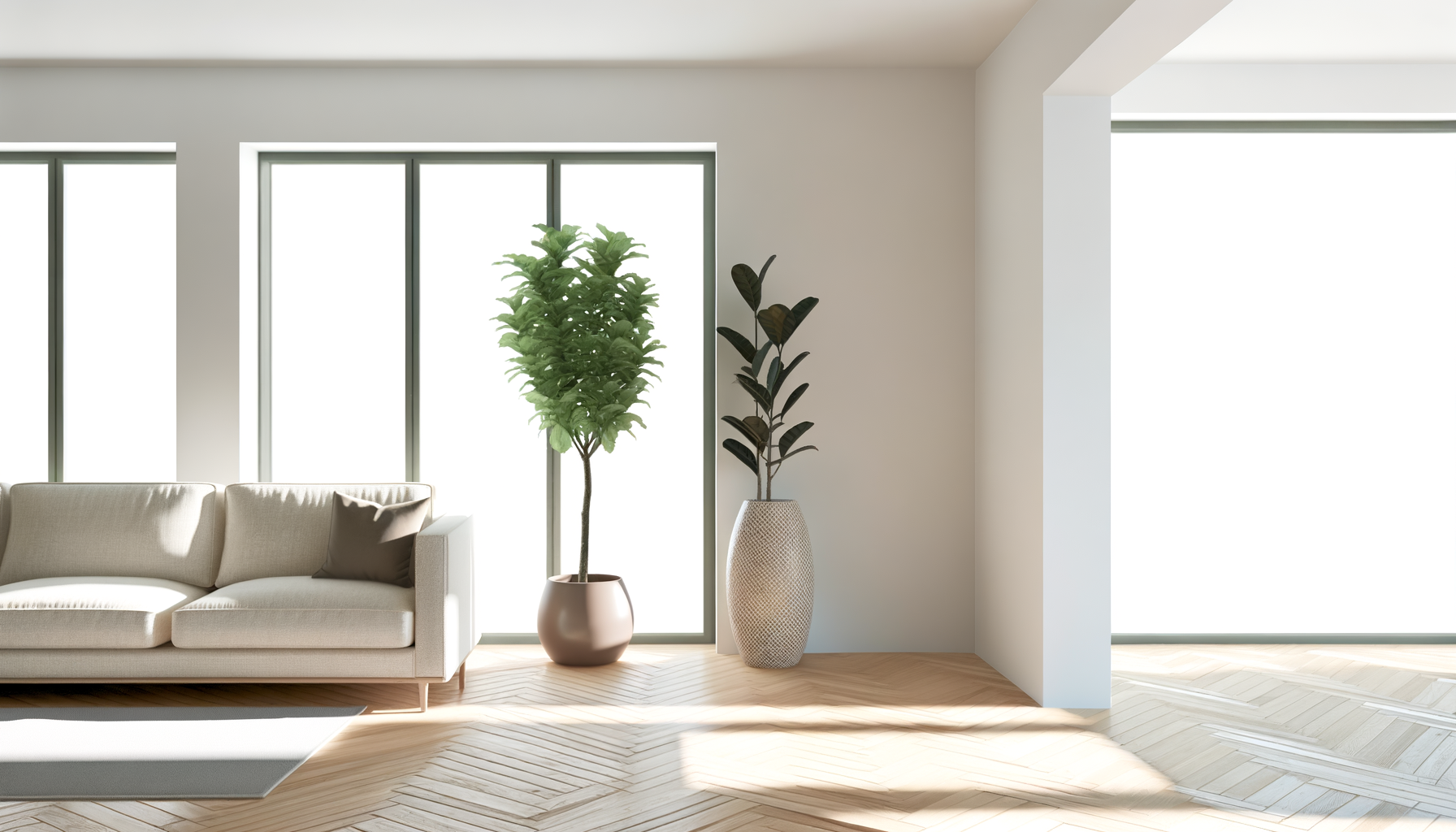
Your biggest indoor trees deserve styling that matches their dramatic presence. The right design choices can turn these living giants into stunning focal points that elevate your entire home’s aesthetic.
Choosing the Perfect Decorative Pot
The container makes or breaks your tree’s visual impact. For tall indoor plants reaching 6-10 feet, choose pots that are at least one-third the height of your tree. A 10-foot Fiddle Leaf Fig looks best in a 3-4 foot planter.
Material matters too. Ceramic and stone planters add weight and stability for top-heavy trees. Woven baskets create a boho vibe but need waterproof liners. Metal planters work great for modern spaces but can heat up near windows.
Color coordination is key. Neutral tones like white, black, or natural terra cotta let your tree shine. Bold colors work if they complement your room’s palette, not compete with it.
Good Tip!
Use a pot with wheels or a plant caddy for trees over 6 feet tall. This makes rotating for even growth and cleaning much easier.
Creating Layered Looks with Companion Plants
Don’t let your big house trees stand alone. Layer smaller plants around the base to create depth and visual interest. Here’s how to build the perfect plant grouping:
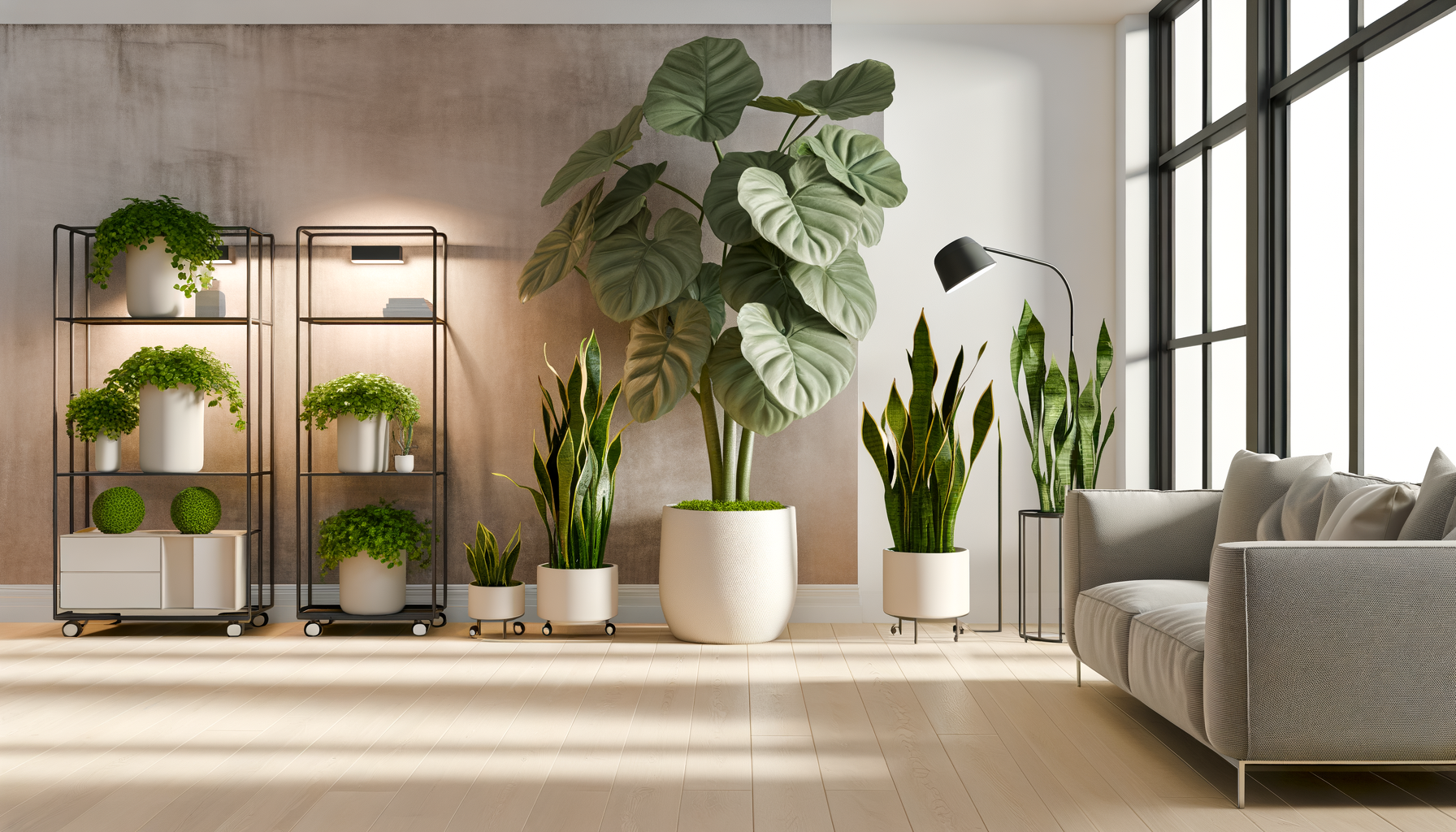
- Place medium plants (2-3 feet) like snake plants or peace lilies around your tree’s base
- Add trailing plants like pothos on plant stands to create different heights
- Use small tabletop plants to fill gaps and complete the look
This layering technique mimics how plants grow in nature. It also helps fill empty floor space and creates a lush, jungle-like atmosphere.
Lighting Enhancement for Maximum Drama
Good lighting transforms your large houseplants for indoors from simple greenery into sculptural masterpieces. Combine functional grow lights with accent lighting for the best results.
LED grow lights keep your trees healthy while adding a warm glow to your space. Position them 12-18 inches above smaller companion plants, not directly on your tall trees.
For drama, try uplighting. Place a small spotlight at the base of your tree to cast beautiful leaf shadows on the wall. This works especially well with Monstera or Bird of Paradise trees that have interesting leaf shapes.
Good Tip!
Install dimmer switches on accent lights around your trees. This lets you adjust the mood lighting for different times of day and occasions.
Seasonal Decorating Ideas
Your biggest indoor trees make perfect backdrops for seasonal decor. In winter, string warm white LED lights through branches (avoid heavy ornaments that stress limbs). Spring calls for pastel ribbon or small hanging planters with seasonal flowers.
Summer styling works well with colorful pot wraps or tropical-themed accessories. Fall brings opportunities for warm-toned decorative elements like amber glass vessels or autumn-colored plant stakes.
Get inspired by browsing luxurious indoor tree styling ideas that show how professional designers make the most of these natural showstoppers.
Remember, less is often more with seasonal decorating. Your tree’s natural beauty should remain the star, with decorations adding just a touch of seasonal flair.
Common Problems with the Biggest Indoor Trees (And Solutions)
Even the most stunning large houseplants for indoors can face challenges. Don’t worry—most problems are fixable once you know what to look for. Here are the most common issues you’ll encounter and how to solve them.
Yellowing Leaves Signal Care Issues
Yellow leaves on your biggest indoor trees usually point to three main culprits. Overwatering tops the list. When soil stays soggy, roots can’t breathe and start to rot. Check the soil with your finger—it should dry out slightly between waterings.
Poor lighting also causes yellowing. Most tall indoor plants need bright, indirect light to stay healthy. If your tree sits in a dark corner, gradually move it closer to a window over several days.
Nutrient deficiency can turn leaves yellow too. Big house trees are heavy feeders during growing season. Feed them monthly from spring through early fall with a balanced liquid fertilizer.
Good Tip!
Stick your finger 2 inches deep into the soil before watering. If it feels moist, wait a few more days. This simple test prevents most overwatering issues.
Brown Leaf Tips Point to Environmental Stress
Brown, crispy leaf tips are your tree’s way of saying it’s stressed. Low humidity is often the main cause. Indoor air, especially during winter, can be too dry for tropical trees.
Set up a pebble tray filled with water near your plant. As water evaporates, it creates a humid microclimate. You can also group plants together—they naturally increase humidity around each other.
Water quality matters too. Tap water with high chlorine or fluoride levels can burn leaf tips. Let tap water sit overnight before using it, or switch to filtered water for sensitive plants.
Good Tip!
Run a humidifier in rooms with your biggest indoor trees during winter months. Aim for 40-50% humidity to keep leaves healthy and prevent brown tips.
Pest Prevention Keeps Trees Healthy
Spider mites, scale insects, and mealybugs love big indoor trees. These pests hide in leaf joints and under leaves, sucking plant juices and weakening your tree.
Check your plants weekly for early signs. Look for tiny webs, sticky honeydew, or white cottony spots. Wipe leaves with a damp cloth monthly—this removes dust and helps you spot problems early.
If you find pests, act fast. Spray affected areas with insecticidal soap or neem oil. For stubborn infestations, you might need professional guidance on pest control methods.
Managing Growth and Size
Your biggest indoor trees will eventually outgrow their space if left unchecked. Regular pruning keeps them manageable and encourages bushier growth.
Prune in spring when growth is most active. Cut just above a leaf node or branch junction using clean, sharp scissors. Remove dead, damaged, or crossing branches first, then shape as needed.
Root pruning might be necessary for pot-bound trees. Every 2-3 years, gently remove your tree from its pot and trim about one-third of the roots. This keeps the tree healthy without requiring a massive pot upgrade.
Conclusion
The biggest indoor trees can dramatically transform your living space into a green sanctuary. Key takeaways include choosing varieties like Fiddle Leaf Figs and Rubber Trees that adapt well to indoor conditions, providing proper lighting and drainage, and positioning them strategically for maximum impact. Start your indoor forest today by selecting one of these magnificent trees that matches your space and care capabilities.
Frequently Asked Questions
How long does it take for indoor trees to reach their full height?
Growth rate varies by species and conditions, but most indoor trees take 3-5 years to reach impressive heights. Fiddle Leaf Figs and Rubber Trees can grow 1-2 feet per year in optimal conditions, while slower growers like Norfolk Island Pines might only add 6-8 inches annually.
Can I keep these trees in rooms without windows?
Most large indoor trees need natural light to thrive and won’t survive in windowless rooms. However, you can use grow lights as a supplement or alternative. LED grow lights positioned 12-24 inches above the plant for 12-14 hours daily can work well for many species.
What’s the best way to move a large indoor tree to a new home?
First, wrap the pot in bubble wrap and secure it with tape. Then, gather the branches gently upward and wrap them loosely in breathable fabric or paper (not plastic). Transport the tree upright if possible, and keep it protected from wind and extreme temperatures during the move.
How do I know when it’s time to repot my indoor tree?
Look for signs like roots growing through drainage holes, water running straight through the pot, or significantly slowed growth. Most large indoor trees need repotting every 2-3 years. Choose a pot just 2-4 inches larger than the current one to avoid overwatering issues.
Will these trees damage my floors or walls?
When properly cared for, indoor trees shouldn’t damage your home. Always use a waterproof saucer under the pot and keep branches trimmed away from walls. For extra protection, place a moisture barrier or decorative mat under the plant to protect flooring from water damage.
Sources
- NASA: Clean Air Study
- University of Georgia College of Agricultural and Environmental Sciences: Interior Landscape Plants for Indoor Air Pollution Abatement
- American Horticultural Society: Indoor Plant Care and Lighting Requirements
- American Horticultural Society: Houseplant Care and Common Problems
- Journal of Environmental Psychology: The Relative Benefits of Green Versus Lean Office Space