
Page Contents
How to Arrange Plants in Living Room: Transform Your Space
The key to successfully arranging plants in your living room is following the triangle rule, matching plants to light zones, and creating visual layers using varying heights and textures.
Transform your living room into a lush, Instagram-worthy sanctuary with the right plant arrangement strategy. Learning how to arrange plants in living room spaces isn’t just about placing greenery randomly—it’s about creating a harmonious ecosystem that enhances your home’s aesthetic while promoting wellness and tranquility.
Many homeowners struggle with cluttered plant displays, poor lighting choices, and arrangements that feel chaotic rather than curated. Without proper guidance, even the most beautiful plants can make a space feel overwhelming or unbalanced.
This comprehensive guide provides expert house plants design ideas, proven arrangement principles, and practical solutions to help you create a stunning living room plant display that thrives both visually and literally.
Understanding Your Living Room’s Plant Zones
Before you learn how to arrange plants in living room spaces effectively, you need to understand your room’s unique environment. Think of your living room as a collection of mini-ecosystems, each with its own personality and requirements.
Map Natural Light Patterns Throughout Different Times of Day
Your living room’s lighting changes dramatically from morning to evening. Spend a full day observing how sunlight moves across your space. That bright corner at 10 AM might be completely shadowed by 3 PM. Take photos every few hours to track these patterns—they’ll become your roadmap for plant placement.
Morning light tends to be gentler and comes from the east. Afternoon sun from the south and west can be intense and hot. Evening light creates beautiful ambiance but won’t sustain your plants. Understanding these shifts helps you match each plant’s needs with the perfect spot.
Identify High, Medium, and Low-Light Areas for Optimal Plant Placement
Once you’ve mapped your light patterns, categorize your spaces into three zones. High-light areas receive direct sunlight for 6+ hours daily—perfect for fiddle leaf figs and snake plants. Medium-light zones get bright, indirect light for 4-6 hours and suit pothos and rubber trees beautifully.
Low-light areas might seem challenging, but they’re goldmines for ZZ plants and peace lilies. These shadier spots often exist near interior walls or behind furniture. Don’t write them off—embrace them as opportunities for dramatic foliage displays.
Good Tip!
Use a light meter app on your phone to measure exact light levels in different zones. Aim for 1000-2000 foot-candles for medium-light plants and 2000+ for high-light varieties.
Assess Traffic Flow Patterns to Avoid Obstructing Walkways
Your beautiful plant arrangement shouldn’t become an obstacle course. Watch how people naturally move through your living room during different activities. The path from the couch to the kitchen should stay clear, and doorways need breathing room.
Consider your furniture arrangement too. That perfect corner spot might not work if it blocks access to your favorite reading chair. Smart indoor plant arrangement tips always prioritize function alongside beauty.
Consider Temperature Variations Near Windows, Heating Vents, and Air Conditioning Units
Temperature fluctuations can make or break your plant arrangements. Areas near windows experience the most dramatic swings—scorching hot in summer, freezing cold in winter. Hardiness zone information helps outdoor gardeners, but indoor plants need similar consideration for microclimates.
Heating vents create desert-like conditions that stress most houseplants. Air conditioning units can cause cold drafts that tropical plants hate. Position sensitive plants at least three feet away from these temperature extremes. Your plants will thank you with healthier growth and fewer brown, crispy leaves.
Essential Principles for Living Room Plant Arrangement
Apply the Rule of Thirds for Balanced Visual Composition
Think of your living room like a photographer’s frame. The rule of thirds divides your space into nine equal sections, creating natural focal points where the lines intersect. When you learn how to arrange plants in living room spaces, place your most eye-catching plants at these intersection points rather than dead center. This creates a more dynamic, visually pleasing arrangement that feels intentional rather than random.
For example, position a tall fiddle leaf fig in the left third of your room near a window, then balance it with smaller plants grouped in the right third. This asymmetrical approach feels more natural and sophisticated than centering everything.
Create Focal Points Using Statement Plants or Plant Groupings
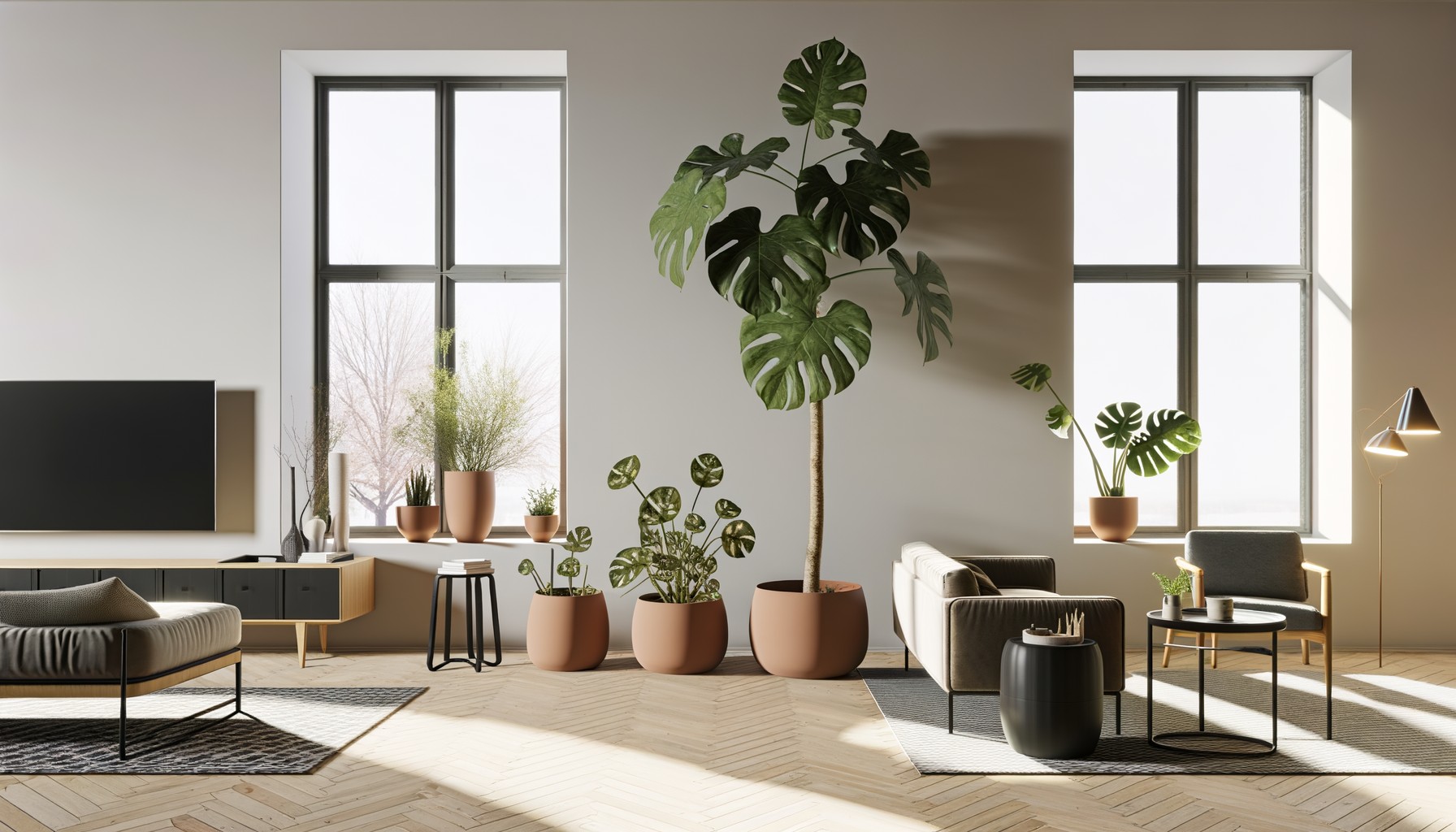
Every great room needs a showstopper. Choose one dramatic plant or create a curated grouping that immediately draws the eye when someone enters your space. A large monstera deliciosa or bird of paradise makes an excellent anchor piece, while clusters of three to five plants in varying pot sizes create visual weight without overwhelming the room.
Avoid scattering single plants throughout your space. Instead, group smaller plants together to create one impactful focal point. This approach follows professional indoor plant arrangement tips that interior designers use to create cohesive, magazine-worthy spaces.
Good Tip!
Use odd numbers when grouping plants. Arrangements of 3, 5, or 7 plants look more natural and visually appealing than even-numbered groupings.
Establish Visual Triangles Using Plants of Varying Heights
Create depth and dimension by arranging plants in triangular formations using tall, medium, and short varieties. Place a floor plant (5-6 feet) as your tallest point, add a medium plant (2-3 feet) on a plant stand or side table, then finish with a small trailing plant (under 1 foot) on a coffee table or shelf.
This layered approach guides the eye naturally through your space and prevents flat, boring arrangements. Mix textures too—pair broad-leafed plants with spiky varieties and trailing plants with upright growers for maximum visual interest.
Balance Plant Colors and Textures with Existing Furniture and Décor
Your plants should complement, not compete with, your existing décor. If you have bold, colorful furniture, choose plants with subtle green tones and simple leaf shapes. For neutral spaces, you can introduce plants with variegated leaves or interesting textures like the silvery elephant ear or deep purple oxalis.
Consider your room’s color palette when selecting planters too. Terracotta pots warm up cool-toned rooms, while white or black planters work beautifully in modern spaces with clean lines.
House Plants Design Ideas by Living Room Style
Your living room style should guide how you arrange plants to create a cohesive look. Different design aesthetics call for specific plant choices, containers, and placement strategies that enhance your existing décor.
Modern Minimalist Plant Arrangements
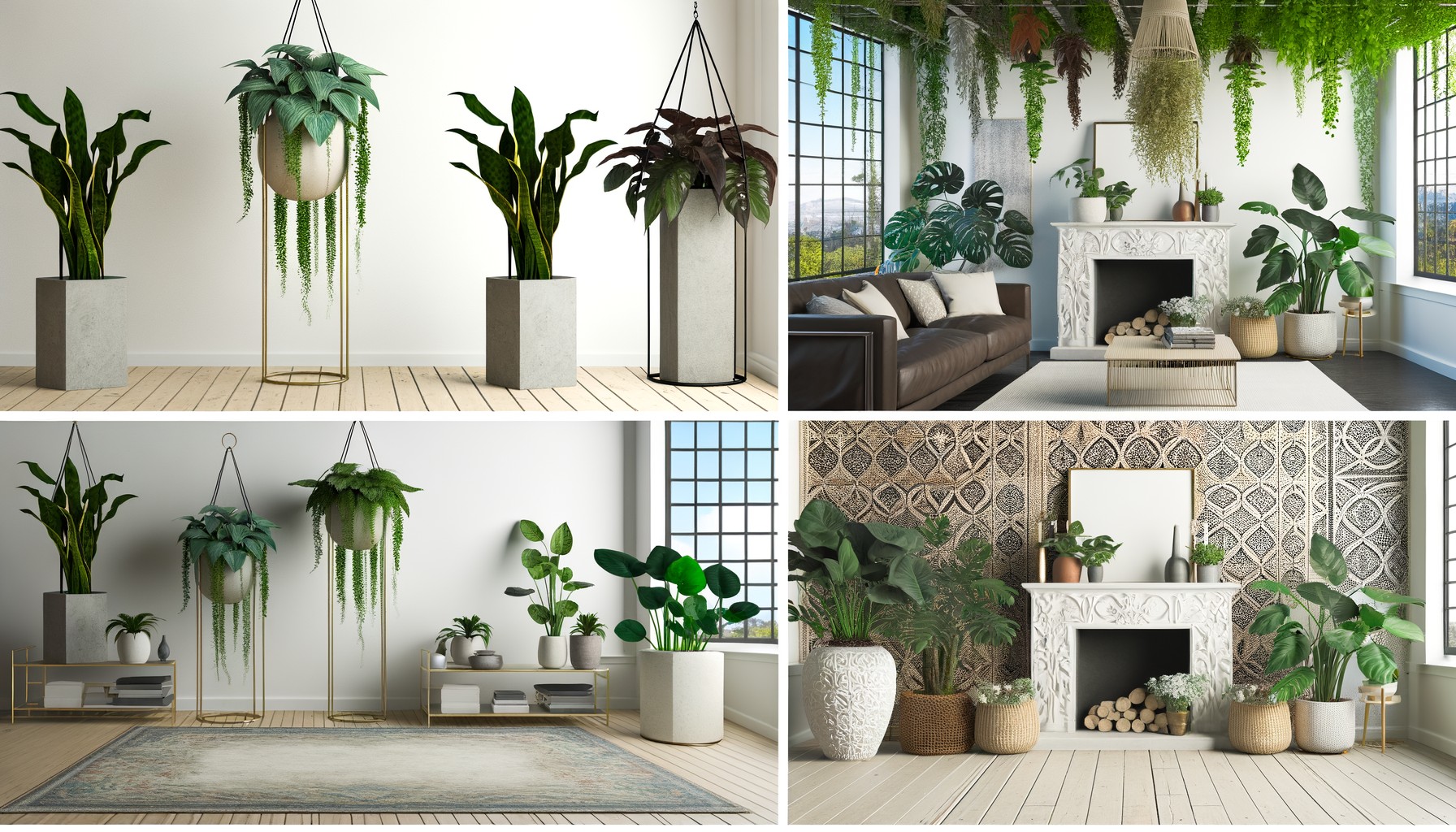
Clean lines and architectural plants define modern minimalist spaces. Snake plants work perfectly in tall, geometric planters positioned in corners or beside sleek furniture. Their upright growth pattern creates striking vertical elements without overwhelming the space. Fiddle leaf figs serve as stunning statement pieces when placed in simple white or black containers near windows with bright, indirect light.
Keep your plant selection limited to 2-3 varieties maximum. Choose plants with bold, structural forms like ZZ plants or bird of paradise. Place them in neutral ceramic or concrete planters that complement your furniture’s color palette. Avoid busy patterns or ornate containers that compete with the minimalist aesthetic.
Good Tip!
Use odd numbers when grouping plants in minimalist spaces—place three small succulents on a console table or position a single large plant as a room anchor.
Bohemian Jungle Style Arrangements
Embrace abundance when learning how to arrange plants in living room spaces with bohemian flair. Layer trailing plants like pothos and string of hearts in macramé hangers at different heights. This creates depth and visual interest while maximizing your growing space.
Mix textures by combining broad-leafed plants like monstera with delicate ferns and spiky plants such as spider plants. Use woven baskets, colorful ceramic pots, and vintage planters to add personality. The key is creating an organic, collected-over-time feeling rather than a perfectly coordinated look.
Traditional Elegant Plant Displays
Classic living rooms benefit from symmetrical arrangements and refined plant choices. Peace lilies and rubber trees work beautifully in matching decorative planters flanking a fireplace or sofa. Choose containers with traditional elements like brass accents, ceramic glazes, or carved details that echo your furniture style.
Focus on plants with graceful forms and lush foliage. Boston ferns in hanging baskets add Victorian charm, while parlor palms provide tropical elegance without overwhelming traditional décor.
Scandinavian-Inspired Natural Arrangements
Scandinavian design emphasizes natural materials and simple beauty. When you arrange plants in this style, choose light wood planters, white ceramic pots, or natural fiber baskets. Eucalyptus, pine, and simple green plants like rubber trees complement the Nordic aesthetic perfectly.
Position plants to highlight natural light—place them on light wood plant stands or simple wooden stools near windows. This Pinterest collection of living room plants showcases excellent Scandinavian-inspired arrangements that balance function with beauty.
Strategic Plant Placement for Maximum Impact
The secret to learning how to arrange plants in living room spaces lies in understanding each area’s unique potential. Every corner, surface, and zone offers distinct opportunities to create visual drama and functional beauty. Let’s explore the most impactful placement strategies that transform ordinary rooms into extraordinary green sanctuaries.
Corner Arrangements That Utilize Vertical Space and Create Dramatic Height
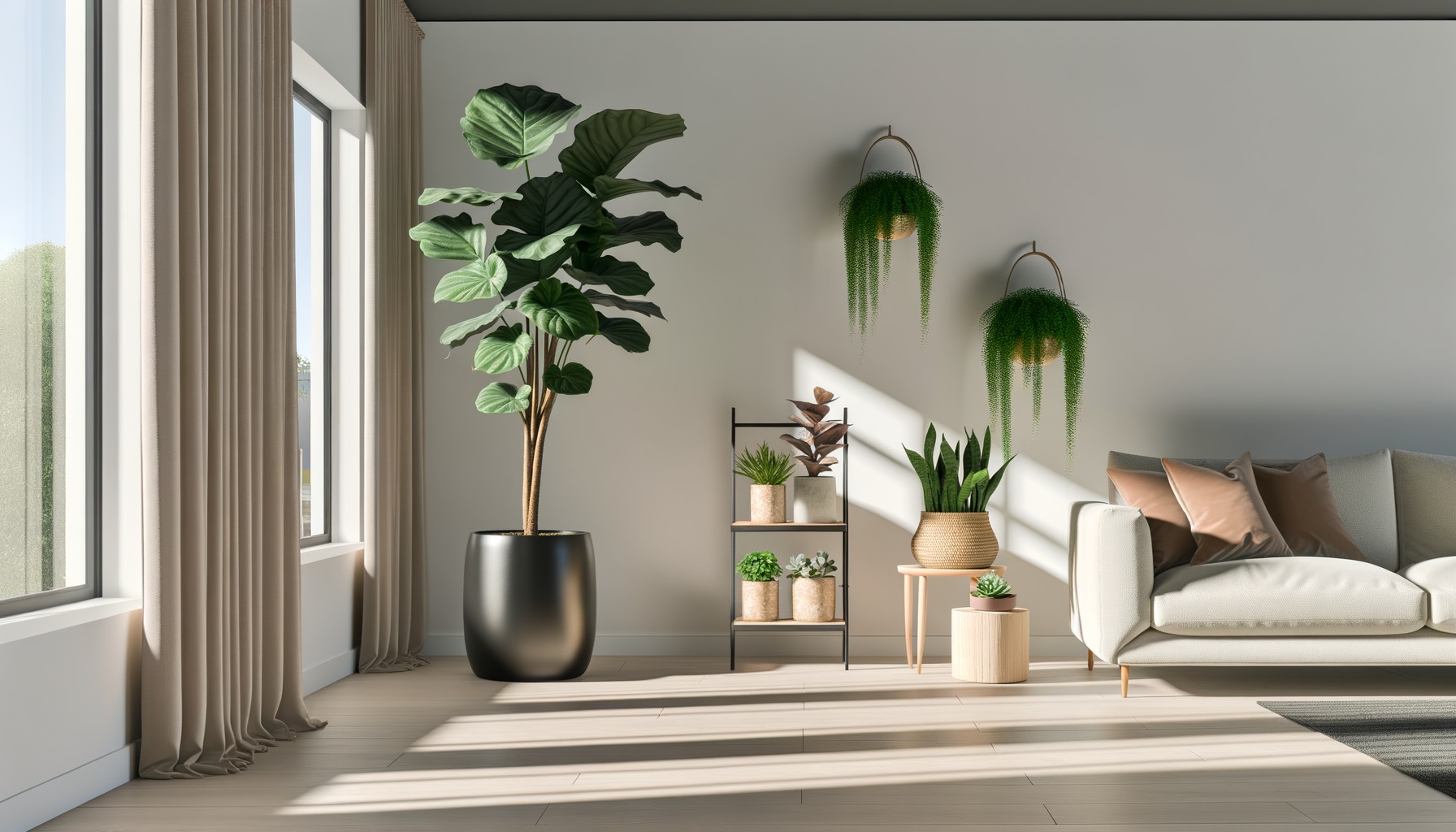
Empty corners are goldmines for plant enthusiasts. These often-forgotten spaces can become stunning focal points with the right approach. Start with a tall statement plant like a fiddle leaf fig or bird of paradise as your anchor. Then layer in medium-height plants on plant stands or decorative stools to create visual depth.
The key is building upward, not outward. Use floating shelves, ladder plant stands, or tall planters to maximize your vertical real estate. This technique draws the eye upward, making your ceiling appear higher while adding lush greenery without eating up precious floor space.
Good Tip!
Place a small grow light behind your corner arrangement to ensure all plants thrive, especially those on lower shelves that might get shaded by taller plants above.
Console and Side Table Styling With Complementary Plant Pairings
Console tables and side tables are perfect platforms for creating curated plant vignettes. The trick is pairing plants with complementary shapes and textures. Try combining a trailing pothos with an upright snake plant, or pair a round-leafed pilea with spiky air plants.
Scale matters here. Your plants should be proportional to your table size—roughly one-third the table’s width for the main plant. Add visual interest by varying pot heights and materials. A ceramic planter next to a woven basket creates textural contrast that feels intentional and sophisticated.
Window Sill Arrangements That Maximize Natural Light Exposure
Window sills offer prime real estate for light-loving plants, but arrangement strategy matters. Place taller plants on the sides to frame your view, with shorter specimens in the center. This creates a natural curtain effect that softens harsh light while showcasing your plants’ best features.
Consider the seasonal sun patterns when planning your window display. South-facing windows might need some shade-loving plants mixed in, while north-facing sills can handle more light-sensitive varieties. Rotating plants weekly ensures even growth and prevents them from leaning toward the light.
Floor Plant Positioning That Anchors Seating Areas and Defines Spaces
Large floor plants act as living furniture pieces that define conversation areas and create natural boundaries. Position a substantial plant like a monstera or rubber tree near your sofa to anchor the seating area. This creates an intimate, cozy feeling while improving air quality right where you spend the most time.
Use floor plants to subtly separate different zones in open-concept spaces. A well-placed plant can distinguish your living area from your dining space without blocking sight lines. This strategic design approach creates visual interest while maintaining the open, airy feel of your room.
Solving Common Living Room Plant Arrangement Problems
Even the most enthusiastic plant parents face challenges when learning how to arrange plants in living room spaces. Don’t worry—every common problem has a smart solution that keeps your green dreams alive.
Addressing Insufficient Natural Light with Grow Lights and Low-Light Plant Varieties
Dark corners and north-facing windows don’t have to kill your plant dreams. LED grow lights have become game-changers for dim spaces. Position full-spectrum grow lights 12-24 inches above your plants for 12-16 hours daily.
Choose plants that actually thrive in low light. ZZ plants, pothos, and snake plants handle darker spots beautifully. Peace lilies and Chinese evergreens add elegant foliage without demanding bright windows. These champions let you create stunning room décor with plants even in challenging lighting conditions.
Good Tip!
Place a mirror behind low-light plants to reflect available light and create the illusion of more greenery in your arrangement.
Managing Pet-Safe Plant Selections Without Sacrificing Style
Pet owners face real limits, but stylish options exist. Spider plants cascade beautifully from hanging baskets. Boston ferns add lush texture to corners. Parlor palms bring tropical vibes without toxicity concerns.
Create height with cat grass towers or wheatgrass displays. Your pets can nibble safely while you enjoy vertical interest. Ponytail palms offer sculptural appeal with zero pet risks. These living room plant décor ideas prove safety doesn’t mean boring.
Dealing with Limited Floor Space Through Vertical and Hanging Solutions
Small spaces demand creative thinking. Wall-mounted planters turn blank walls into green galleries. Hanging macramé holders draw eyes upward, making rooms feel larger.
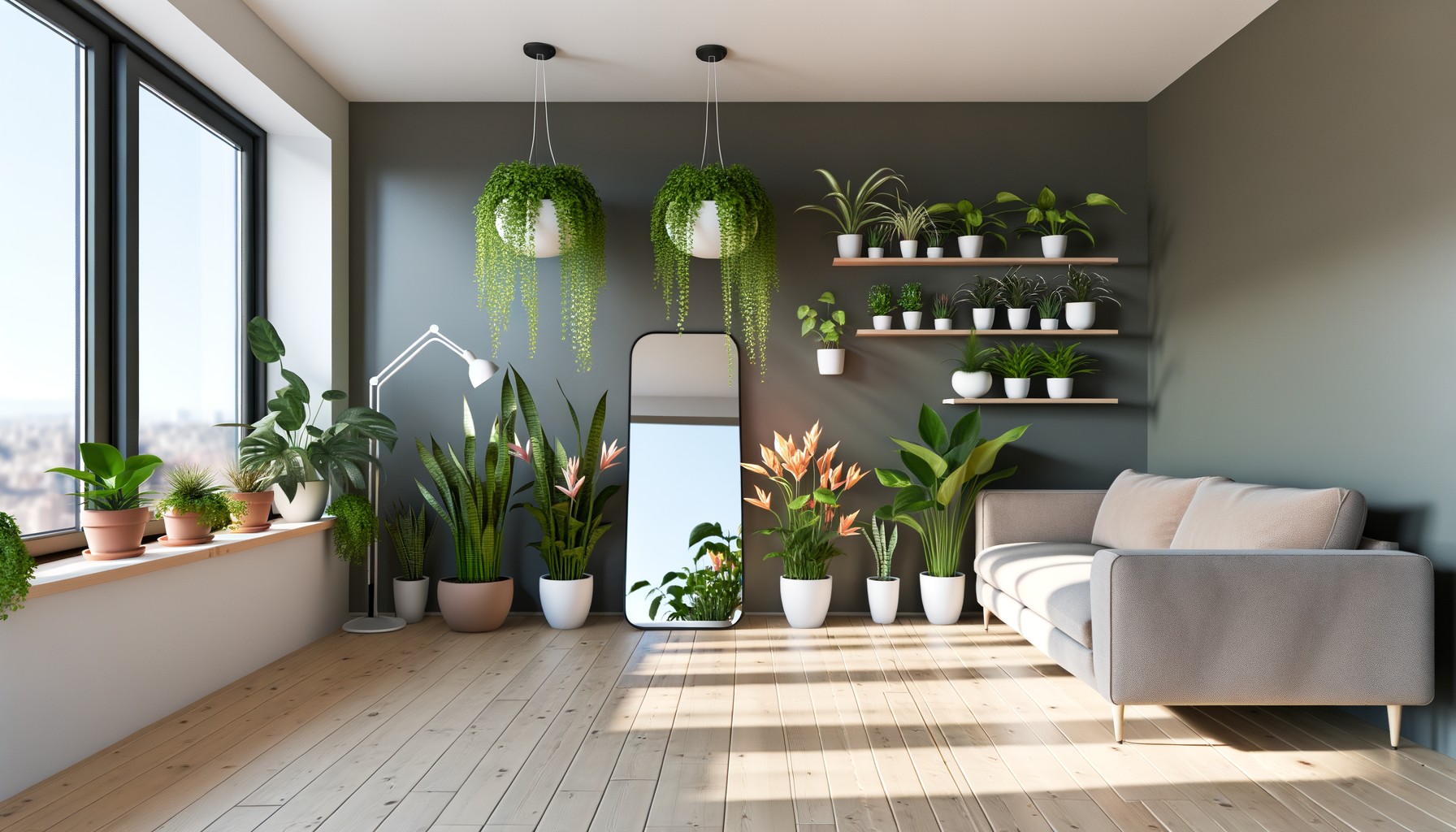
Corner plant stands maximize forgotten spaces. Tall, narrow plant towers fit between furniture pieces. Window-mounted shelves create mini gardens without stealing floor space. These indoor plant arrangement tips help you go vertical when you can’t go wide.
Preventing Plant Overcrowding While Maintaining Lush, Full Arrangements
More isn’t always better. Space plants so air circulates freely between leaves. This prevents fungal issues and lets each plant shine individually.
Use the triangle rule: arrange plants in odd-numbered groups with varying heights. Leave breathing room—about 6 inches between smaller plants, 12 inches for larger ones. Rotate plants weekly so all sides get equal light exposure. This house plant styling guide approach creates abundance without chaos.
Seasonal Plant Arrangement Updates and Maintenance
Your living room plant display needs regular updates to stay fresh and healthy year-round. Just like your wardrobe changes with the seasons, your plant arrangements should evolve to match shifting light patterns, temperature changes, and your home’s seasonal décor.
Rotating Plants Based on Changing Light Conditions Throughout the Year
Winter sunlight hits your windows at completely different angles than summer rays. That fiddle leaf fig thriving in your south-facing corner during summer might struggle when the sun sits lower in winter. Move light-loving plants closer to windows during darker months, and shift shade-preferring plants away from intense summer sun.
Track how light moves through your space each season. Take photos of the same spots at different times of year to see the dramatic changes. Your snake plants can handle the darker winter corners, while your pothos might need a prime window spot when daylight hours shrink.
Incorporating Seasonal Blooming Plants and Temporary Displays
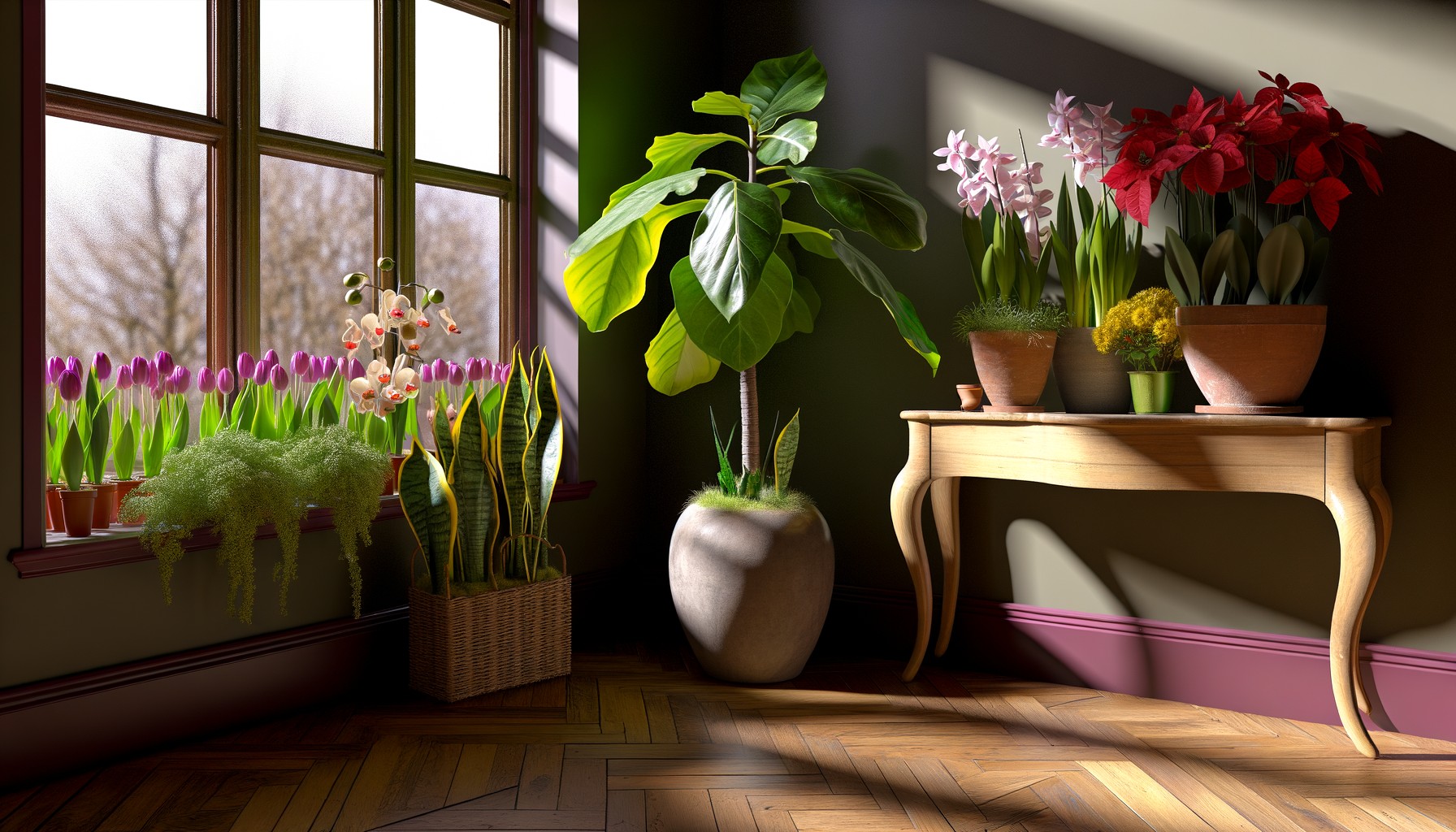
Seasonal bloomers add instant color and excitement to your year-round plant foundation. Spring brings cheerful tulip bulbs and Easter lilies. Summer calls for vibrant orchids or flowering begonias. Fall mums and winter poinsettias keep the color flowing.
Think of these as your living room’s seasonal accessories. Place them strategically to complement your permanent plant arrangements. A bright yellow orchid can brighten a grouping of green foliage plants, while red poinsettias add festive cheer to neutral spaces.
Good Tip!
Create a seasonal plant rotation schedule by marking your calendar with light changes, temperature shifts, and blooming seasons. This prevents forgotten plants from struggling in wrong conditions.
Adjusting Watering Schedules and Humidity for Grouped Plant Arrangements
Grouped plants create their own microclimate, but seasonal changes affect their water needs dramatically. Winter heating systems dry out the air, making your plant clusters thirsty for humidity. Summer air conditioning can have similar effects.
Check soil moisture more frequently when seasons change. Plants in groups often need different watering schedules than solo plants. The plant in the center of a grouping might stay moist longer, while edge plants dry out faster. Use a moisture meter to avoid guesswork.
Pruning and Maintenance Schedules That Keep Arrangements Looking Fresh
Regular pruning keeps your plant arrangements looking intentional rather than overgrown. Dead-head spent flowers, trim yellowing leaves, and pinch back leggy growth. This maintenance becomes crucial when learning how to arrange plants in living room spaces that need to look polished year-round.
Spring is prime time for major pruning and repotting. Summer calls for light trimming and pest monitoring. Fall preparation includes reducing fertilizer and checking for any plants that need winter protection. A well-planned seasonal garden maintenance schedule keeps your indoor arrangements thriving just like outdoor gardens.
Conclusion
Mastering how to arrange plants in living room spaces transforms your home into a vibrant, healthy sanctuary that reflects your personal style. The most successful arrangements follow key principles: understanding your room’s unique light zones, applying visual balance through the triangle rule, and selecting plants that complement both your décor and lifestyle needs. Start small with one corner arrangement, then expand your design as you gain confidence and experience.
Frequently Asked Questions
How many plants is too many for a living room?
There’s no strict rule, but a good guideline is to ensure plants occupy no more than 25% of your available floor and surface space. Focus on creating intentional groupings rather than scattered individual plants, and make sure there’s still plenty of room for people to move comfortably through the space.
What if my pets keep knocking over my plant arrangements?
Try securing larger pots with non-slip mats underneath, and consider mounting plants on walls or using hanging planters out of reach. You can also create a “pet-free zone” using decorative barriers or place plants on elevated surfaces like mantels and tall plant stands.
How do I maintain a cohesive look when mixing different types of plants?
Use consistent pot styles or colors throughout the room, even if the plants vary. Group plants with similar care needs together, and maintain a balanced distribution of sizes and textures. Try to stick to a specific design style (modern, bohemian, etc.) to guide your choices.
Do I need to rearrange my plants when seasons change?
Yes, it’s recommended to adjust plant positions seasonally as light patterns change. Winter typically requires moving plants closer to windows, while summer might mean pulling sensitive plants back from intense direct sun. Pay attention to heating/cooling vents during extreme weather as well.
What’s the best way to water plants in grouped arrangements?
Water each plant individually rather than treating the group as one unit, as different plants have different needs. Use a moisture meter to check soil dampness, and consider placing saucers under each pot to prevent water damage to surfaces. Group plants with similar watering needs together when possible.
Sources
-
NASA Clean Air Study
-
Journal of Environmental Psychology- The Psychological Benefits of Indoor Plants,” Environmental Psychology Research Institute
-
American Society of Interior Designers- 2024 Interior Design Trends and Challenges Report